Sui Gas Connection
Meta Description: Sui Gas Connection guide covering application process, eligibility, documents, fees, installation steps, safety tips, and FAQs for residential and commercial users.
A Sui Gas Connection is one of the most essential utilities for households and businesses. In many regions, natural gas plays a major role in cooking, heating, and industrial operations. Getting a Sui Gas Connection may seem complicated at first, but once you understand the process, it becomes much easier.
If you’re planning to apply for a Sui Gas Connection, knowing the right steps can save you time, money, and stress. From application forms to installation and safety checks, every stage matters.
This complete guide walks you through every detail so you can move forward confidently.
Understanding Sui Gas Connection
A Sui Gas Connection refers to the supply of natural gas to homes, businesses, or industries through pipelines. It’s a convenient, affordable, and efficient energy source.
Unlike LPG cylinders, natural gas through pipelines offers uninterrupted service. That’s why many people prefer a permanent Sui Gas Connection.
What Is Sui Gas Connection?
In simple terms, it’s a utility service that connects your property to the natural gas distribution system.
Natural gas is delivered through underground pipelines directly into your property. This means no hauling cylinders or worrying about running out.
Benefits include:
- Continuous gas supply
- Lower fuel cost
- Safer than many alternatives
- Better for the environment
It’s no wonder the demand for Sui Gas Connection keeps growing.
Why Natural Gas Matters
Natural gas is considered cleaner compared to coal and oil.
Here’s why it matters:
| Benefit | Explanation |
| Affordable | Lower monthly energy cost |
| Reliable | Continuous supply |
| Cleaner | Reduced carbon emissions |
| Efficient | Better heating performance |
For families, it simplifies kitchen work. For businesses, it reduces operating costs.
Types of Gas Connections
Not all Sui Gas Connection types are the same.
Residential Connection
Used in homes for cooking and heating.
Commercial Connection
Used in restaurants, shops, and offices.
Industrial Connection
Designed for factories and manufacturing units.
Each category has different requirements and fee structures.
Eligibility for Sui Gas Connection
Before applying for a Sui Gas Connection, you must know whether you qualify.
Eligibility depends on several factors.
Residential Requirements
For home users:
- Valid CNIC or identification
- Ownership proof or tenancy agreement
- House construction completed
- Gas pipeline availability in the area
If the gas line isn’t nearby, approval may take longer.
Commercial Requirements
Businesses usually need:
- Business registration certificate
- Owner identification
- Property lease or ownership papers
- Tax documents
Commercial Sui Gas Connection applications often go through extra verification.
Industrial Requirements
Industries have stricter requirements.
These may include:
- Environmental approvals
- Industrial license
- High-capacity pipeline feasibility
- Safety certifications
Big setups often need technical inspections.
Area Feasibility Check
This is crucial.
Gas companies first confirm whether supply lines exist in your area.
If the infrastructure isn’t available, your application may stay pending.
That’s the catch—location matters a lot.
Documents Required for Sui Gas Connection
Documentation is the backbone of your Sui Gas Connection application.
Missing even one document can delay the process.
Identity Documents
Basic documents include:
- National ID card copy
- Passport-size photographs
- Contact number
Ensure all documents are clear and valid.
Property Ownership Proof
This proves you’re authorized to request the connection.
Accepted documents:
- Registry papers
- Sale deed
- Property tax receipt
For rented properties:
- Rent agreement
- Landlord permission letter
Additional Supporting Documents
Depending on your case:
- Utility bills
- Building map
- Completion certificate
Commercial applicants may need extra paperwork.
Document Checklist Table
| Document | Residential | Commercial | Industrial |
| CNIC | Yes | Yes | Yes |
| Property Proof | Yes | Yes | Yes |
| Tax Record | No | Yes | Yes |
| License | No | Yes | Yes |
| Safety Certificate | No | Sometimes | Yes |
Keeping everything organized speeds things up.
Step-by-Step Application Process
Applying for a Sui Gas Connection has become easier over time.
Still, understanding the process helps avoid mistakes.
Online Application Method
Most gas companies now offer online applications.
Steps:
- Visit the official website
- Create an account
- Fill application form
- Upload documents
- Submit application
- Receive tracking number
Official portal: https://www.sngpl.com.pk
Online applications are quicker and easier to track.
Offline Application Method
Prefer old-school? No problem.
Visit the nearest gas office and:
- Collect form
- Fill it carefully
- Attach documents
- Pay application fee
- Submit to officer
Some folks still prefer face-to-face help.
Verification Process
After submission:
- Documents are checked
- Property is verified
- Technical feasibility is reviewed
This process may take several weeks.
Inspection and Survey
Field staff visit your property.
They check:
- Distance from pipeline
- Safety compliance
- Installation feasibility
This step is critical.
No survey, no connection.
Approval Stage
Once verified, your application enters approval.
If all is good, you receive confirmation.
Simple as that—but patience is key.
Charges and Fees for Sui Gas Connection
Understanding the financial side of a Sui Gas Connection is essential.
Costs vary based on category.
Installation Charges
Basic charges include:
| Type | Estimated Cost |
| Residential | Moderate |
| Commercial | Higher |
| Industrial | Highest |
Installation costs depend on pipeline distance.
Security Deposit
A refundable amount is often required.
This acts as protection against unpaid bills.
Meter Charges
Gas meter installation may have separate fees.
The meter measures your monthly usage.
Hidden Costs to Consider
Watch out for:
- Internal piping
- Fittings
- Labor charges
- Safety valves
People often forget these expenses.
And honestly, they add up fast.
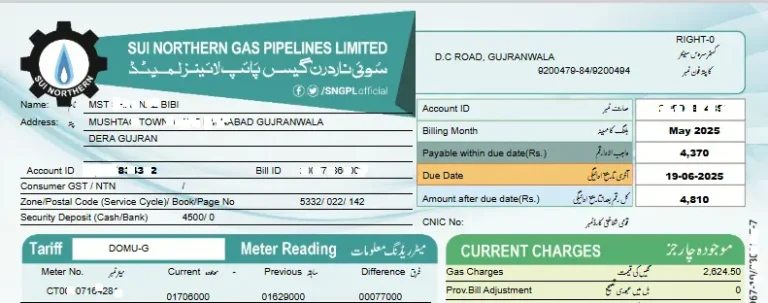
Monthly Billing
Your bill depends on:
- Consumption
- Meter reading
- Tariff category
Using gas wisely reduces costs.
Installation Process of Sui Gas Connection
After approval, installation begins.
This is where your Sui Gas Connection becomes real.
Pipeline Survey
The technical team marks the route.
Factors considered:
- Shortest path
- Safety standards
- Accessibility
Survey quality affects long-term performance.
Excavation Work
Trenches are dug for pipelines.
This must follow safety protocols.
Poor excavation can damage nearby utilities.
Meter Installation
The gas meter is installed at the property entrance.
It tracks gas usage accurately.
Important tip:
Protect the meter from damage.
Internal Connection Setup
Pipes are connected inside the house.
Usually linked to:
- Kitchen stove
- Water heater
- Heating units
Qualified technicians should do this.
Safety Inspection
Before activation:
- Leak testing
- Pressure testing
- Valve inspection
This ensures safe operation.
Activation
Once approved, the gas supply starts.
That’s the final green light.
And there you go—your Sui Gas Connection is live.
Common Problems and Solutions
Even after getting a Sui Gas Connection, problems can happen.
Knowing solutions helps.
Delayed Connection
Cause:
- High demand
- Missing documents
- Area limitations
Solution:
Track your application regularly.
Low Gas Pressure
This can affect cooking.
Possible reasons:
- Peak hours
- Pipeline blockage
- Supply shortage
Fix:
Contact customer support.
Billing Complaints
Sometimes bills seem higher than expected.
Reasons:
- Wrong reading
- Leakage
- Tariff issue
Always verify meter readings.
Gas Leakage
A serious issue.
Signs include:
- Smell of gas
- Hissing sound
- Increased bill
Immediate action:
Turn off the main valve.
Call emergency service.
Don’t light anything.
Safety Tips for Using Sui Gas Connection
Safety should always come first.
A Sui Gas Connection is useful, but only when handled correctly.
Leak Prevention
Regularly inspect:
- Pipes
- Joints
- Stove connections
Small leaks can become dangerous.
Proper Ventilation
Keep kitchens ventilated.
Natural airflow prevents gas buildup.
Appliance Maintenance
Service gas appliances regularly.
This improves efficiency.
And cuts risk.
Emergency Preparedness
Know these basics:
- Main valve location
- Emergency contact numbers
- Exit routes
It’s better to be prepared than sorry.
Child Safety
Teach children:
- Don’t touch valves
- Don’t play near gas meter
Simple rules save lives.
Frequently Asked Questions (FAQs)
1. How long does a Sui Gas Connection take?
It can take a few weeks to several months depending on area feasibility and application volume.
2. Can tenants apply for a Sui Gas Connection?
Yes, but landlord approval is usually required.
3. What documents are required for Sui Gas Connection?
Identity proof, property papers, and application form are usually required.
4. Is the security deposit refundable?
Yes, in most cases, it’s refundable after account closure.
5. Can I transfer my Sui Gas Connection?
Yes, ownership transfer is possible with proper documentation.
6. What should I do if I smell gas?
Turn off the valve, avoid flames, and call emergency services immediately.
7. Can I apply online for Sui Gas Connection?
Yes, many providers now offer online application systems.
Conclusion
Getting a Sui Gas Connection is an important step toward convenient and affordable energy use. While the process may seem lengthy, understanding eligibility, required documents, application methods, and installation steps makes it much smoother.
A well-managed Sui Gas Connection improves daily life, reduces energy costs, and offers reliable fuel for years to come.
Whether for your home, business, or industry, staying informed is the smartest move. Follow the correct steps, maintain safety standards, and you’ll enjoy uninterrupted gas service without unnecessary hassles.
Post-Article Note:
Always verify the latest policies, fees, and application procedures with your local gas provider before submitting your Sui Gas Connection application. Requirements can change over time.
Output in